This site is only being updated in part now. Existing full posts will still remain, but for new blogs and more information on me, please see my new website HERE
Sunday, 22 January 2012
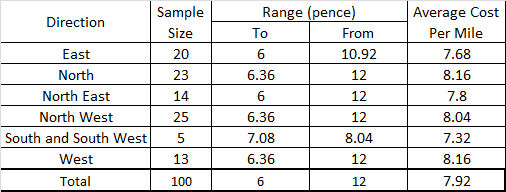
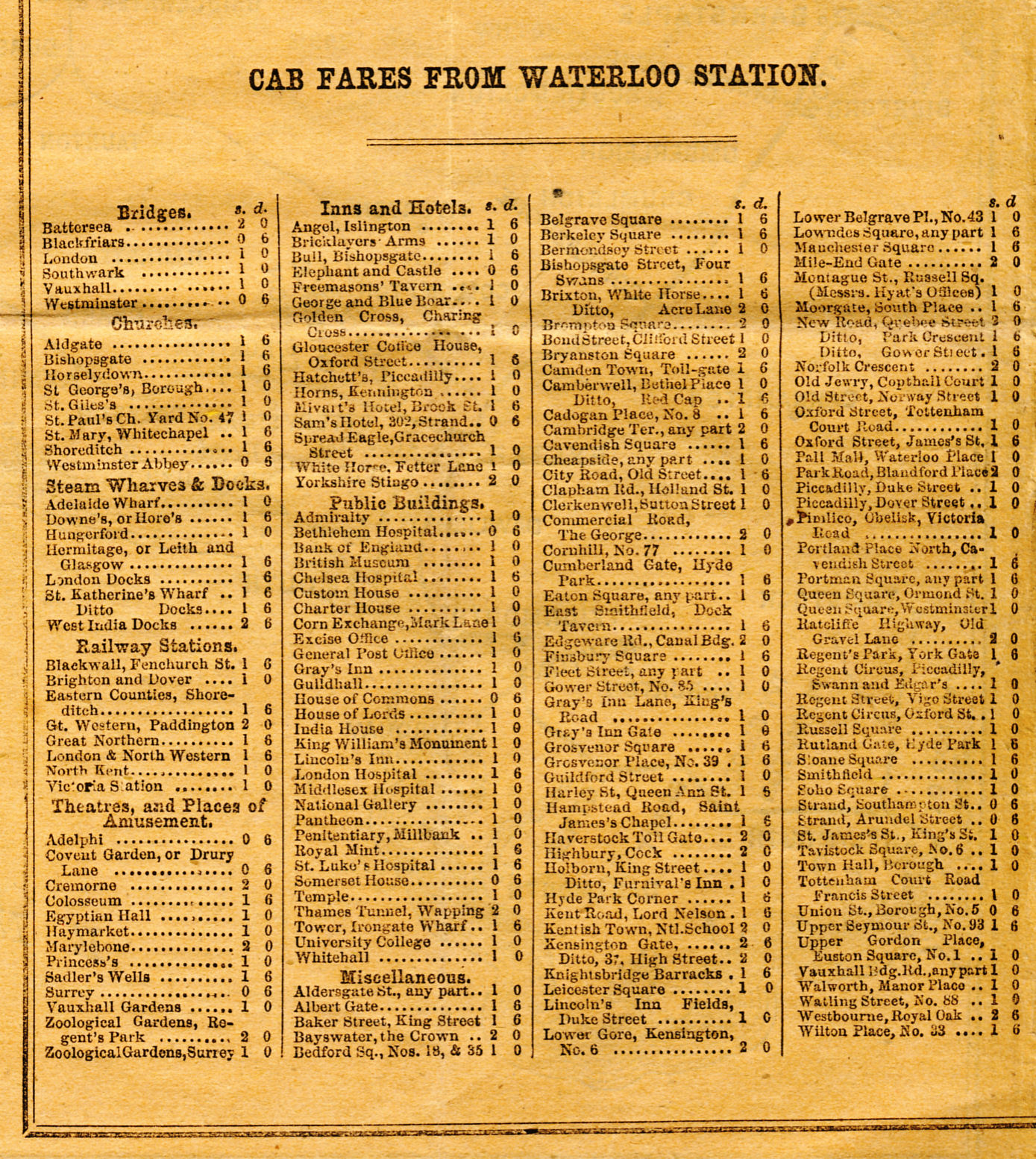
The Dynamics of Cab Fares from Waterloo Station in 1864
Tuesday, 22 November 2011
The Opening of the Rebuilt Waterloo Station - 1922 (200th Post)
This, believe it or not, is my 200th post on
the TurnipRail Blog (Note: All images are clickable). So, to commemorate such a momentous occasion, I thought
that I would look at the opening of the rebuilt Waterloo Station in 1922. This
is aided by a copy of the London and South Western Railway’s (L&SWR) staff
magazine, the South Western Railway Magazine
(SWRM), which I acquired on ebay and which commemorated the event. Purchasing
this item is big occasion for me because the station is important in my life
and I have grown fond of it. Not only do I pass through Waterloo once or twice
a week, but its rebuilding is featured in the last chapter of my PhD.
With the massive passenger traffic growth of the late
1890s Waterloo again became unsuited to requirements. Thus, the company obtained
an act from parliament in 1899 for a complete rebuilding of it and an expansion
of the space it occupied. This expansion eventually meant that the company had
to rehouse the 1,750 people whose houses were demolished.[4] Up until 1910 the work
was slow due to company suffering a capital shortage. However, because of the appointment a new
company chairman in 1911, Hugh W. Drummond, and a new General Manager in 1912,
Herbert A. Walker, the speed of the work increased. The war had some affect,
but generally progress was good.
Outside the station waiting for the Queen were the
company’s ‘Chairman, Directors, General Manager and Chief Officers,’ in
addition to as many staff as the space permitted. The Queen’s car swung through
the gates, which were decorated with evergreens and bunting, and came to a halt
in front of the “Victory Arch.” On alighting from the vehicle the Queen was
immediately greeted by the L&SWR’s chairman, Brigadier-General Hugh W.
Drummond, and the Deputy-Chairman, Sir William Portal Bart. The Queen too had people
with her, including Lady Ampthill, Viscount Valentia and Colonel Clive Wigram. Then,
after pleasantries had been exchanged, Miss Marion Drummond, the chairman’s
daughter, approached and presented the Queen with a bouquet of red roses.
She then turned to enter the station, passing on her way
a Guard of Honour composed of ex-soldiers employed by the L&SWR and who had
been decorated for valour in the First World War. After exchanging a few words
with some of the officers in the guard, positioned in its front row, she
progressed through the seven long ranks of men drawn up before her. As she
reached the last, a cheer rose from hundreds of the L&SWR’s staff watching
in an enclosure behind.
On reaching the top of the entrance’s stairs, the Queen
broke the Royal Blue Ribbon stretched across it and the station was officially
open. Yet, before entering, she stopped for some while to read many of the names
of the 585 L&SWR employees killed in the war that are listed on bronze
panels set into the “Victory Arch.” Then, followed by ‘directors, officers and
ladies’, she continued into the station and was greeted by cheers from the
crowds waiting on the concourse. The station was lined with bunting and flags,
and on glancing upwards, toward the extensive glass roof, she exclaimed “What a
splendid piece of architecture.”Sunday, 20 March 2011
Making a Mess of a Station - Extending Waterloo Station in 1878 and 1885
Waterloo Bridge Station, as it should be more accurately known, was built because in 1839 the LSWR's main line did not reach London, its first terminus being at Nine Elms. Yet, the LSWR was determined to strike reach the city, and in 1848 the company opened their new line to Waterloo Bridge. As Colin Chivers and Philip Wood have commented, this new station was never intended to be a terminus, nor the great station that it became. Indicative of this, an original plan (which I cannot reproduce) shows that 3 of the 6 lines went through the station and into the back wall, so as to allow easy extension to the city or Southwark.[2] Yet, the hoped-for extension did not happen and Waterloo quickly became the point on which all LSWR operations were focussed. The first major alteration to the station came in 1860 when four more platforms were built on its north side, bringing the total to 8.[3] Through various alterations this number had risen to 12 by 1878.
After 1870 the number of passengers that the company carried on its line, particularly on its suburban routes, began to increase rapidly. In 1870 the LSWR conveyed 13,387,357 passengers, in 1875 this had risen to 20,998,310 and by 1880 30,294,406 people travelled with the company. This was an overall increase of 126.29%.[4] I have commented in an earlier blog post that this put a strain on the company’s services and about the many complaints were directed against the management as a result (Found Here). But, with such an unexpected rise in the level of traffic it is unsurprising that the management of the LSWR was caught unawares. Thus, in 1874 the LSWR's directors decided to act. While an aspect of their plan was to add an extra line between Clapham Junction and Surbiton,[5] they predominantly focussed on the bottle-neck at Waterloo Station. Here many trains were kept waiting outside the station as there were insufficient platforms for the ever-increasing number that were scheduled to cope with the rising traffic.
However, without an accurate way of predicting how traffic would grow, the extension of Waterloo Station from 1874 onwards was a very ad hoc affair, that reflected that the LSWR managers were simply reacting to the business environment and had no way of knowing what the future would bring. In 1874 the company submitted in its bill of that year a plan to ‘widen and improve’ Waterloo station on the south side.[6] Opened in December 1878, the new ‘South’ station was entirely self-contained, having its own booking office and taxi yard. Crucially, it added a further two platforms to the Waterloo complex.[7]
Continued traffic growth in the 1870s meant that soon after these new platforms opened the extra capacity it provided was deemed insufficient to cope with ever-rising train movements. Thus, in 1881 the company submitted a further bill to parliament for another extension of the station on its north side.[8] Opened in stages in 1885, this new ‘North’ station added a further six platforms to the station, bringing the overall total to 18.[9] This was also technically a separate station and had its own booking office and taxi yard
This was how the station would remain until 1902 (see map - showing 1895). The ‘North’ Station served the Windsor and Reading Lines, the ‘Central’ station served the West of England Main Lines, and the ‘South’ station served the Hampton Court, Kingston and Leatherhead lines.[10] Amongst the public the nickname of the ‘south’ station was ‘Cyprus,’ after the British annexation of 1878, and the north station became ‘Khartoum,’ after the Sudan campaign of 1885.[11]
Friday, 30 July 2010
When decision making changed for Britain's railways - The L&SWR's Decisions in the early 20th Century

But why should I just focus on the company’s passenger traffic? Despite having a booming goods business, the majority of the company’s revenue came from passenger services. Thus, if we take 1900 as an example, while the goods revenue of the company came to £1,356,209, the passenger revenue was £2,997,274 (or 68.8% of overall revenue). Thus any decisions regarding the company’s passenger services were vital to its profitability.
Waterloo Station
Has anyone ever read Jerome K. Jerome’s 1889 book Three Men in a Boat? In it he described the problem with Waterloo Station in the late 19th Century.
“We got to Waterloo at eleven, and asked where the eleven-five started from. Of course nobody knew; nobody at Waterloo ever does know where a train is going to start from, or where a train when it does start is going to, or anything about it. The porter who took our things thought it would go from number two platform, while another porter, with whom he discussed the question, had heard a rumour that it would go from number one. The station-master, on the other hand, was convinced it would start from the local.”
While I won’t go into great detail as to why the station was so difficult to navigate, in short, it had been built up bit by bit over the years since 1848. The L&SWR hadn’t conducted complete rebuilds of the station as more capacity was required to accommodate the traffic, but rather had just ‘bolted on’ new platforms, canopies and facilities every now and again. Thus, in 1898 Waterloo actually had three stations that were all connected; Central, which was the old 1848 structure, South, added in 1878 and North, dating from 1885. This was confused by the fact that the 18 lines running into the station only shared ten platform numbers.
In the 1890s the company was facing a capacity problem at Waterloo as passenger traffic had grown at a very rapid rate. The table below shows the growth in the number of passengers carried, the number of passenger train miles run and the revenue from passenger traffic between 1890 and 1900. Therefore, the rebuild it was a direct response to the fact that passenger traffic had grown at a very rapid rate in the 10 years and that more accommodation was required. Thus, the move to rebuild the station taken in 1898 was reactive to the physical constraints of the company’s infrastructure.

In a sense, this was the last of the L&SWR’s great projects that was reacting to the physical constraints of the company’s infrastructure. To look at any business decisions before 1900, the majority were made because the continually rising traffic meant that the company required extra facilities to deal with that fact. Thus, the company were never exceedingly worried that the expense would be unnecessary as in the long run the expected revenues from passenger growth would eventually cover the cost of construction. This was essentially because the railways were operating in a period when they had monopolies on transportation in most places and did not see any challenge to their unique position. Thus, the Waterloo rebuild was continuing this pattern of decision making, but, it was the last large-scale investment that adhered to it.
The station was completed in 1919 and on the 21st of March 1922 was officially opened by Queen Mary.
The Electrification Scheme
There were a number of things that affected the way that the L&SWR viewed their suburban passenger services in the early 20th century, most of which involved electricity. Firstly, the company opened its long-awaited extension to Bank Station via the Waterloo and City line. Electrically run, this was a good testing bed for electric trains within the L&SWR’s sphere of influence. Yet, at this point the L&SWR showed little interest in using the technology on its overground services. Further, up to 1905 the company cooperated with the Metropolitan District Railway Company when they electrified their lines to Richmond and Wimbledon. The Chairman of the L&SWR, Campbell, said he would watch how the new services did with interest. Indeed, the result was that passengers deserted the slow L&SWR steam hauled routes to the city in favour of the clean electric trains. The most important event came when the London United Tramways Company (LUT) started extending into the L&SWR’s suburban region. They reached Hounslow in 1901, Twickenham in 1902 and Hampton court in 1903. Further, in 1902 the LUT received permission to extend to Sunbury and Wimbledon and was looking at building lines to Staines. Finally, in 1906-07 the LUT extended to Kingston, Surbiton, New Malden and Wimbledon.
Thus, the L&SWR started to suffer in its suburban zone. According to Faulkner and Williams in 1902 the L&SWR lost 64% of its receipts on the Hounslow route because of the LUT’s activities. Indeed, if we consider the table above we can see that in the 10 years after 1900 the growth in the number of passengers, passenger train miles and passenger revenue slowed considerably in contrast with the 10 years before. Thus, there were worrying signs that underlying idea that had endured for decades, that the growth number of passengers would continue unabated, was probably doubted. Indeed, at the 1913 General Meeting, the investors were told that the company had lost £100,000 in revenue and the passenger numbers were by then falling by a million per year. Thus the company’s had, by that point, become a reality.
The first stage of the electrification plan was confirmed by the board in December 1912. The proposed routes to be electrified are shown in the picture. The move was therefore different from the rebuilding of Waterloo. Waterloo was rebuilt based on the assumption that Passenger traffic would continue to rise and that there would be no alteration in this fact. However, the Electrification scheme was adopted because of exactly the opposite reason, a fear that passenger traffic, and profits, would decline. Therefore, the attack on passenger traffic by the company’s first real competitors in the suburban passenger market must have been unexpected given the prior history of the L&SWR. Thus, they were made the decision because they were trying to protect their business.
The company completed the planned suburban electrification in the years after 1912, connecting to Wimbledon, Kingston, Hampton Court, Hounslow, Claygate and Shepperton by 1915-16. It was the Southern Railway that would continue the L&SWR’s work.
Conclusion
In the context of the profitability and performance problems of the British Railway industry in the late Victorian period, what could be said about these two events? Firstly, it is evident that despite the failing profitability of the period 1870 to 1900, it wasn’t substantial enough to change the company’s reaction to the increased passenger traffic and the need for greater facilities. Faced with capacity problems they did not try alternative ideas to solve them, for example reducing the number of trains running into Waterloo or closing stations to reduce the number of passengers carried. Instead, they continued with the long-standing pattern of rebuilding existing facilities so every passenger would be accommodated, confident in the knowledge that the cost would, eventually be covered. However, they were shocked into action when the passenger growth, that had always been expected, did not materialise because of new and unexpected competed forms of passenger transport. As such, they were forced into reacting to their business environment by trying to protect the traffic they did have.
Thus, what these two large L&SWR investments symbolise is an important moment in the history of Britain’s railways. The early 1900s were when companies stopped considering that Traffic would always continue to rise, but rather, tried to protect what they had because the business environment had changed. In essence, the period was when Britain’s railway’s would start their long decline towards Beeching.
Bibliography
Faulkner, J.N. and Williams, R.A. The LSWR in the Twentieth Century, (London, 1988)